
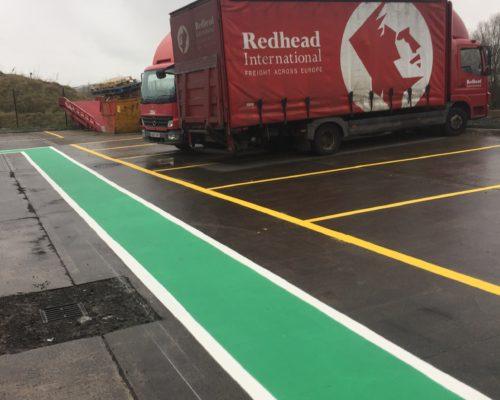
Car Park Sealing in the Midlands
Car park sealing in the Midlands is the maintenance job that pays for itself several times over and almost never gets budgeted. Here’s the arithmetic nobody presents to facilities managers. Sealing a sound deck costs a fraction of coating it, and coating it costs a fraction of repairing the reinforcement corrosion that follows if you do neither. Salt-laden water is the whole problem. It comes in on every tyre through winter, soaks into porous concrete and carries chloride ions down toward the steel. Once those ions reach the reinforcement in sufficient concentration, corrosion starts, the steel expands, and concrete spalls off from the inside. That process is invisible for years and then extremely expensive all at once.
A penetrating sealer stops the water getting in while your deck is still sound. It’s genuinely preventative, which is exactly why it gets deferred. Ron will survey your deck, test absorption and tell you honestly whether sealing is enough or whether you’ve already passed the point where a full system is the sensible spend. Sometimes the answer saves you a great deal of money. Multi-storeys, basements and commercial yards across Westmeath, Offaly and Dublin have had that assessment from us, and several clients have used us for years since — as our customer testimonials reflect.
Want to know if sealing is enough for your deck? Call Ron on 086 2631652 for a free survey.
Sealing or Coating? Knowing Which You Need
These two get confused constantly, and the difference is worth thousands.
- Sealing protects sound concrete. A penetrating sealer soaks into the surface and lines the pores. There’s no film, no thickness and no change to appearance or grip. It stops water absorption while leaving the concrete breathable.
- Coating rebuilds and waterproofs a compromised deck. A resin system adds a physical membrane, bridges hairline cracks and provides a new wearing surface. That’s the answer when the concrete is already deteriorating, covered on our car park flooring page.
- Sealing suits sound decks with intact surfaces. Little or no spalling, no exposed reinforcement, minimal cracking. Typically newer structures or well-maintained older ones.
- Coating becomes necessary once damage has started. Visible spalling, rust staining on soffits, cracking or ponding all point that way, since a sealer can’t bridge a crack or rebuild lost concrete.
- The cost gap is substantial. Sealing is measured in a few euro per square metre. Full deck systems cost many times that. Getting the diagnosis right is where the value sits.
We’d rather sell you the cheaper job that works than the expensive one that wasn’t needed. That’s not generosity — it’s how repeat clients happen.
Sealer Types and How Long Each Lasts
Not all sealers do the same thing, and the differences are practical rather than academic.
- Silane impregnation. The specification of choice for structural decks. Silane molecules are small enough to penetrate several millimetres into concrete and line the pores with a hydrophobic layer. Water beads and runs off. Vapour still escapes, so the slab breathes. Service life typically runs 8–10 years.
- Siloxane and silane-siloxane blends. Slightly larger molecules, marginally less penetration, lower cost. Perfectly adequate on sheltered decks and basement floors where exposure is milder.
- Silicate densifiers. These harden the surface rather than repelling water. Useful where dusting is the main complaint, and often combined with a silane for both effects. More detail on our dust proofing page.
- Acrylic surface sealers. They form a thin film on the surface. Cheap and quick, but they wear off under tyre traffic and can reduce slip resistance when wet. We rarely recommend them for vehicle decks.
- Polyurethane and epoxy sealers. Thin film-forming systems that sit between sealing and coating. Good for basement floors with light traffic where some abrasion resistance is wanted.
- Anti-slip additives. Where a film-forming sealer is used on ramps or walkways, aggregate goes into it. Penetrating silanes don’t affect grip at all, which is one of their real advantages.
Colourless is standard, so your deck looks essentially unchanged. That surprises some clients, but a sealer that changes nothing visually is doing exactly what it should.
How We Seal Car Parks in the Midlands
Application is quick. The preparation and the timing are what determine whether it works.
Free Survey and Absorption Testing
Ron walks the deck and carries out a simple water absorption test. Concrete that drinks water needs sealing; concrete that already beads it may still be protected from a previous treatment.
He’ll also check for spalling, rust staining, crack patterns, drainage falls and ponding areas — because any of those may mean sealing alone isn’t the right recommendation.
You get a written, itemised quote with cleaning, repairs and sealing priced separately.
Cleaning and Decontamination
A sealer can’t penetrate through traffic film, oil or algae. So the deck is cleaned properly first.
Pressure washing lifts surface contamination and rubber deposits. Oil-stained bays are degreased separately, since silane won’t penetrate through grease. Drainage gullies get cleared at the same time.
Drying Time
This is where jobs go wrong. Silanes need dry concrete, typically 48 hours without rain and with surface moisture below the product threshold.
Applying to damp concrete blocks penetration and you end up with a surface treatment rather than an impregnation. So we plan around the weather rather than the schedule, and we’ll delay a day rather than apply into a slab that isn’t ready.
Repairs Before Sealing
Any defects get dealt with first, because sealing over damage just locks the problem in.
Spalled areas are cut back and rebuilt through our concrete floor repairs service, with exposed reinforcement cleaned and inhibited. Cracks are filled or stitched via floor stitching, and perished movement joints are reinstated through mastic floor joint repairs.
Where the surface is closed or heavily contaminated, light floor grinding opens the pores so the sealer can actually get in.
Application
Silane is applied by low-pressure spray at the specified coverage rate, worked to a wet edge so nothing is missed. Coverage matters enormously here — under-application is invisible on the day and useless in three years.
A second application follows on porous decks, applied wet-on-wet or after the first has absorbed, depending on the product.
Vertical surfaces, upstands and kerb faces are treated too, since water tracks to the edges and attacks there first.
Drying and Reopening
Most silanes are touch-dry within 2–4 hours and take vehicle traffic within 6–12 hours. There’s no curing shutdown of the kind resin systems require.
That speed is why sealing suits live car parks so well. We seal in sections, reopen behind ourselves and rarely need a full closure.
Markings and Handover
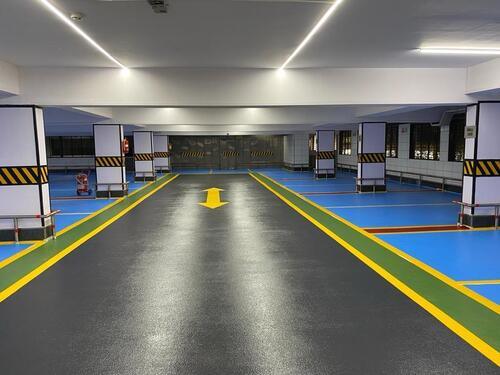
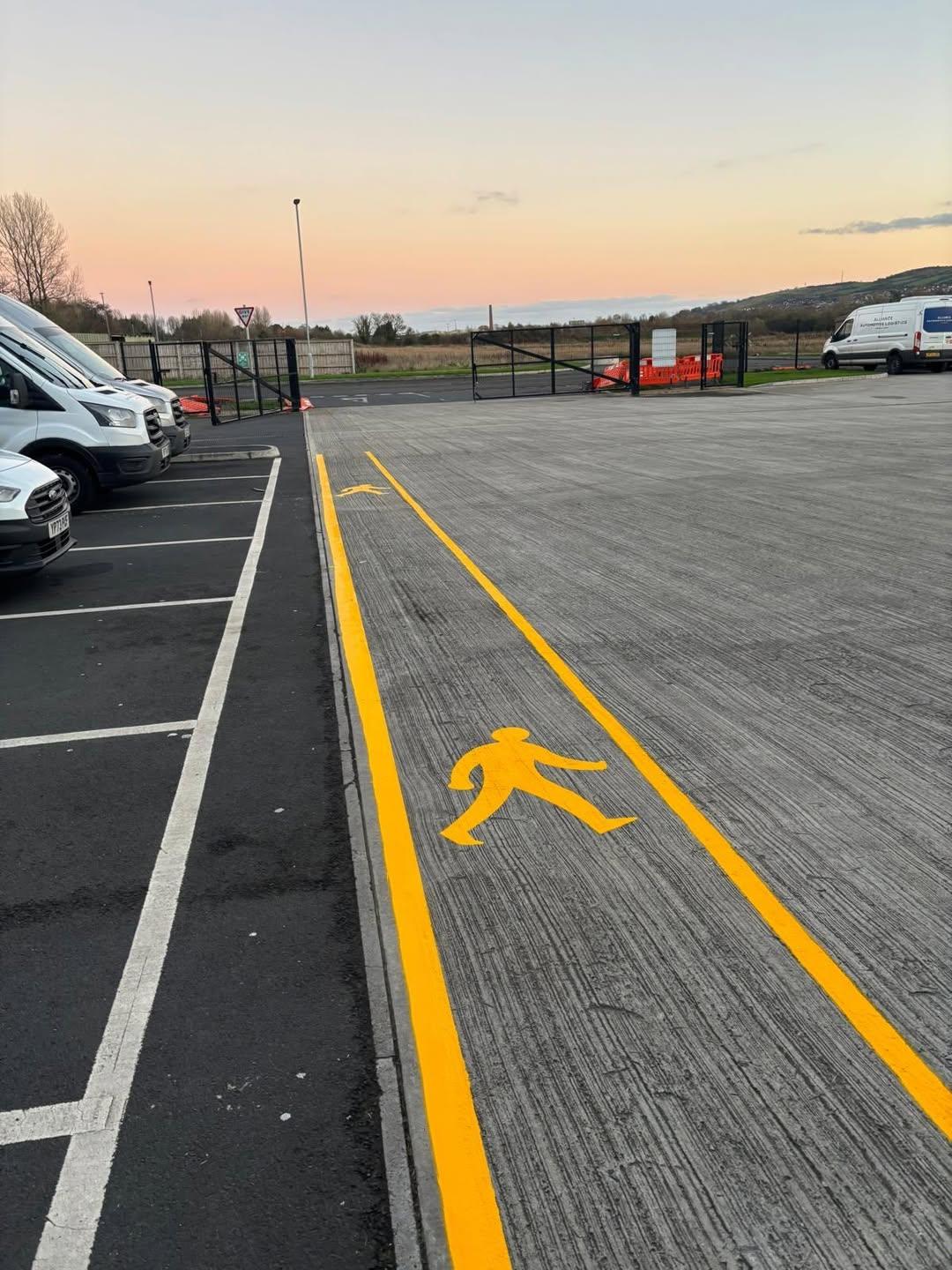
Where bay markings have faded, sealing is the natural moment to refresh them. We handle that through traffic line marking and pedestrian routes through safety line marking.
You get a product record, coverage rates and a recommended retreatment date. Our before and after gallery shows completed work.
What Sealing Actually Buys You
Chloride Attack Slowed Dramatically
This is the whole purpose. Water carrying road salt is what corrodes reinforcement, and a hydrophobic surface stops it entering in the first place.
Freeze-Thaw Damage Reduced
Water absorbed into concrete expands when it freezes, breaking the surface apart microscopically. Keep the water out and the cycle largely stops.
Structural Repairs Deferred by Years
Every year your reinforcement stays uncorroded is a year the concrete repair bill stays in the future. That deferral is the entire commercial case.
Very Low Disruption
Sections reopen within hours. For a car park that can’t afford closure, sealing is one of the few genuinely practical maintenance options.
No Change to Grip or Appearance
Penetrating sealers add nothing to the surface, so slip resistance stays exactly as it was and the deck looks unchanged.
Staining Reduced
Oil, fuel and general grime penetrate far less into sealed concrete, so the deck stays cleaner and washes down more effectively.
Cost per Square Metre That Makes Sense
Compared with any resin system, sealing is inexpensive. On large decks, that difference is what makes protecting the whole area affordable at all.
Where We Seal Car Parks Across the Midlands
Multi-Storey Car Parks
Exposed top decks take the worst of the weather and the salt. These are the highest priority on any structure and usually the first area we’d recommend treating.
Underground and Basement Parking
Less UV, but persistent damp and poor ventilation. Sealing reduces absorption and helps with the dusting that plagues these floors.
Retail and Shopping Centre Car Parks
Constant use with no realistic closure window. Sealing suits them precisely because sections reopen the same day.
Hospital, Hotel and Office Parking
Round-the-clock operation and high visibility. Overnight and phased working keeps everything accessible.
Apartment and Residential Developments
Management companies planning long-term maintenance. Sealing is one of the few interventions that fits a sinking fund comfortably.
Commercial Yards and Loading Areas
Heavier loads and constant manoeuvring. Where wear is significant, we’d point you toward concrete sealing with a harder wearing specification or a full industrial flooring build.
Service Areas, Ramps and Access Roads
Ramps get the hardest tyre scrub on any site. These often need a film-forming system with anti-slip rather than a plain impregnation.
We deliver car park sealing in the Midlands across Athlone, Mullingar, Tullamore, Portlaoise, Longford Town, Birr and Roscommon Town, with full Dublin and nationwide coverage from our Dublin 3 base.
Why Choose Midland Floor Painting Company?
- Ron tests absorption before recommending anything. If your deck already repels water, you don’t need us this year, and we’ll tell you that.
- We’ll say when sealing isn’t enough. Once spalling and rust staining appear, a sealer is the wrong spend. Honest advice here saves you paying twice.
- We wait for dry concrete. Silanes applied into damp slabs don’t penetrate. We’d rather lose a day to the weather than hand over a treatment that isn’t working.
- Coverage rates respected. Under-application looks identical on the day and fails within a few years, so we apply at the specified rate and record it.
- Repairs done first. Spalling, cracks and perished joints are addressed before sealing, because sealing over damage simply preserves it.
- Sections reopened as we go. Phased working means your car park keeps earning throughout.
- Free written, itemised quotes. Cleaning, repairs and sealing appear as separate lines so you can see exactly what’s being spent where.
- Decades of hands-on experience. Deck protection is core work for us, backed by 5-star Google reviews and years of repeat clients. Read more about Ron and the crew.
Related Services
Sealing sits within a wider maintenance picture. Decks that have already deteriorated need full waterproofing through car park flooring, while general industrial slabs are better served by concrete sealing. Preparation runs through pressure washing and, where the surface is closed, diamond grinding. Old failed deck coatings come off through our floor coating removal service before anything new is applied. Basement floors that dust badly usually benefit from dust proofing alongside sealing. Not sure which your deck needs? Book a floor inspection and repair visit and we’ll assess it properly.
Get Your Free Car Park Sealing Quote Today
Reinforcement corrosion is the most expensive thing that can happen to a car park, and it starts silently. Water carries salt into the concrete every winter, chloride builds up around the steel, and by the time rust staining shows on a soffit the damage is well established. Sealing costs a few euro per square metre and stops the water getting in. Structural repair costs many multiples of that and stops nothing — it just fixes what’s already gone.
Car park sealing in the Midlands, delivered by Ron and the crew, is assessed honestly and applied at proper coverage rates. The survey is free. The quote is written and itemised. Sections reopen within hours, so your deck keeps working.
Call Ron: 086 2631652 — direct line, straight answers
Call Office: 014800555 — Sun–Fri, 09:30–17:30
Email: info@midlandsfloorpaintingco.ie
Or send your details through our contact page and we’ll come back to you the same working day, with no obligation.
Keep the water out now, or pay for the steel later.